Launch offer — valid today only

📄 Digital book in PDF · read it on your phone or print it

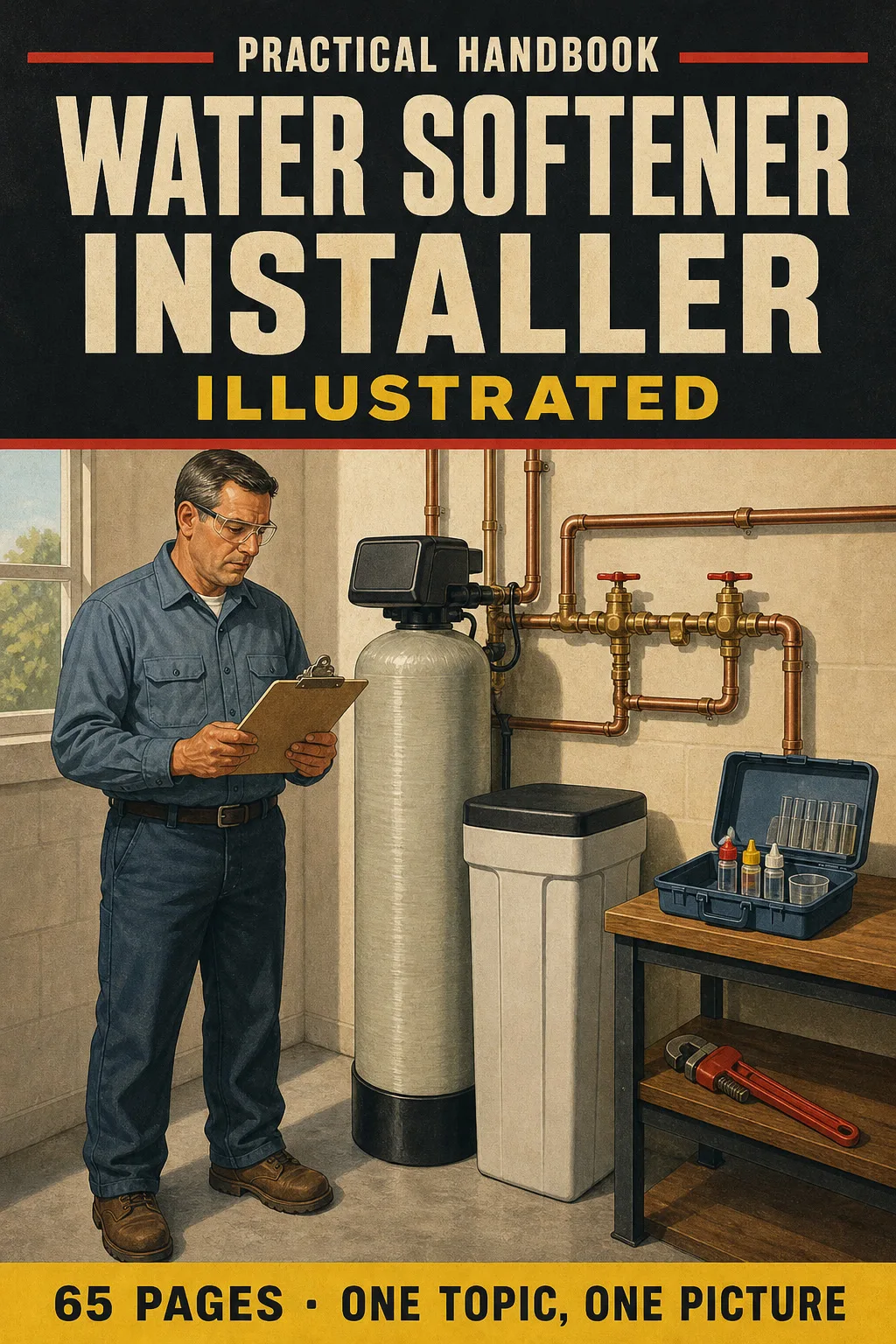
Water Softener Installer Illustrated: the Texas Water Treatment Specialist Exam in Drawings Every System in the Same Order

Grains per gallon, reading a water test, softener sizing, salt settings, the regeneration cycle, the drain air gap, iron filters, RO and UV. Every topic gets its own page: the drawing first, then what you need to remember. 65 illustrated pages.

START STUDYING THIS WAY

🔒 Secure checkout · PDF by email · 30-day guarantee

Every topic, its own pageEach system drawn in cross-section, with the explanation right beside it
65 illustrated pages8 parts, from the license classes to the final install checklist
Up-to-date sourcesTCEQ rules (30 TAC Chapter 30), EPA drinking water standards and the plumbing code adopted in Texas
PDF by emailFormat

Look Inside the Book

Every page has one big drawing and a box with the numbers and steps you need to know:

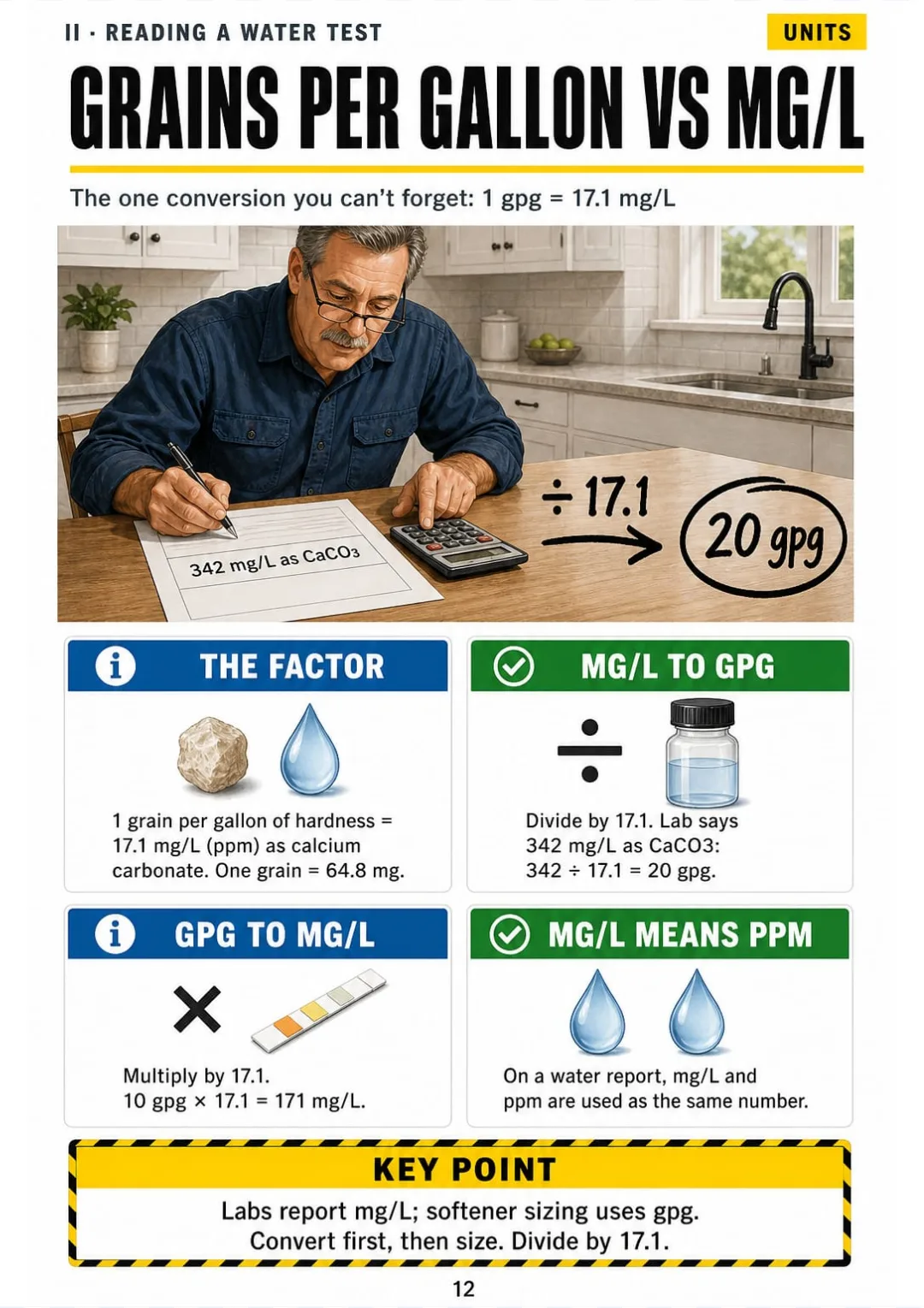
1 gpg = 17.1 mg/L as CaCO3 · 342 mg/L ÷ 17.1 = 20 gpg
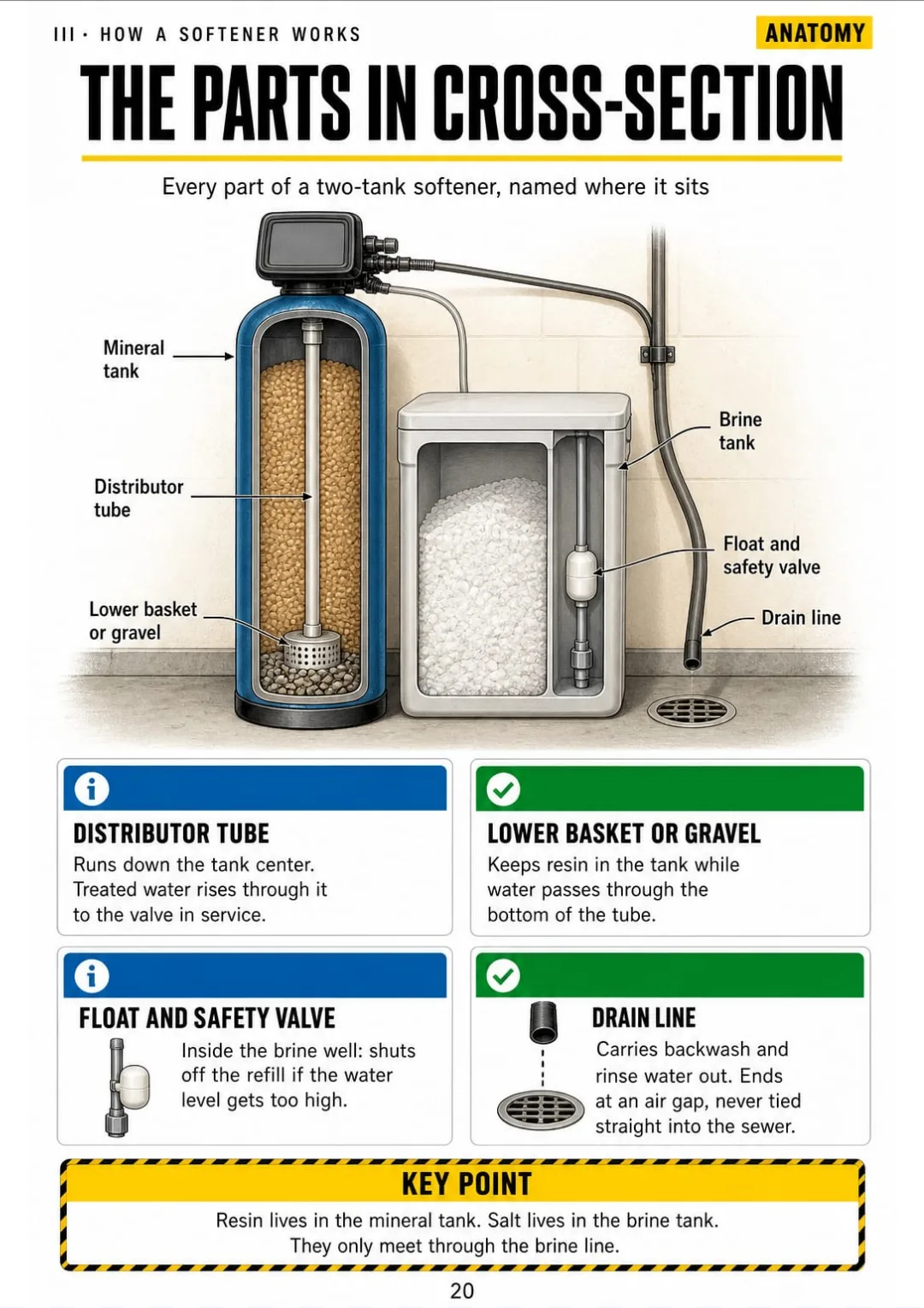
Two tanks, eight parts: control valve, resin bed, distributor tube, basket, brine well, float, brine line, drain
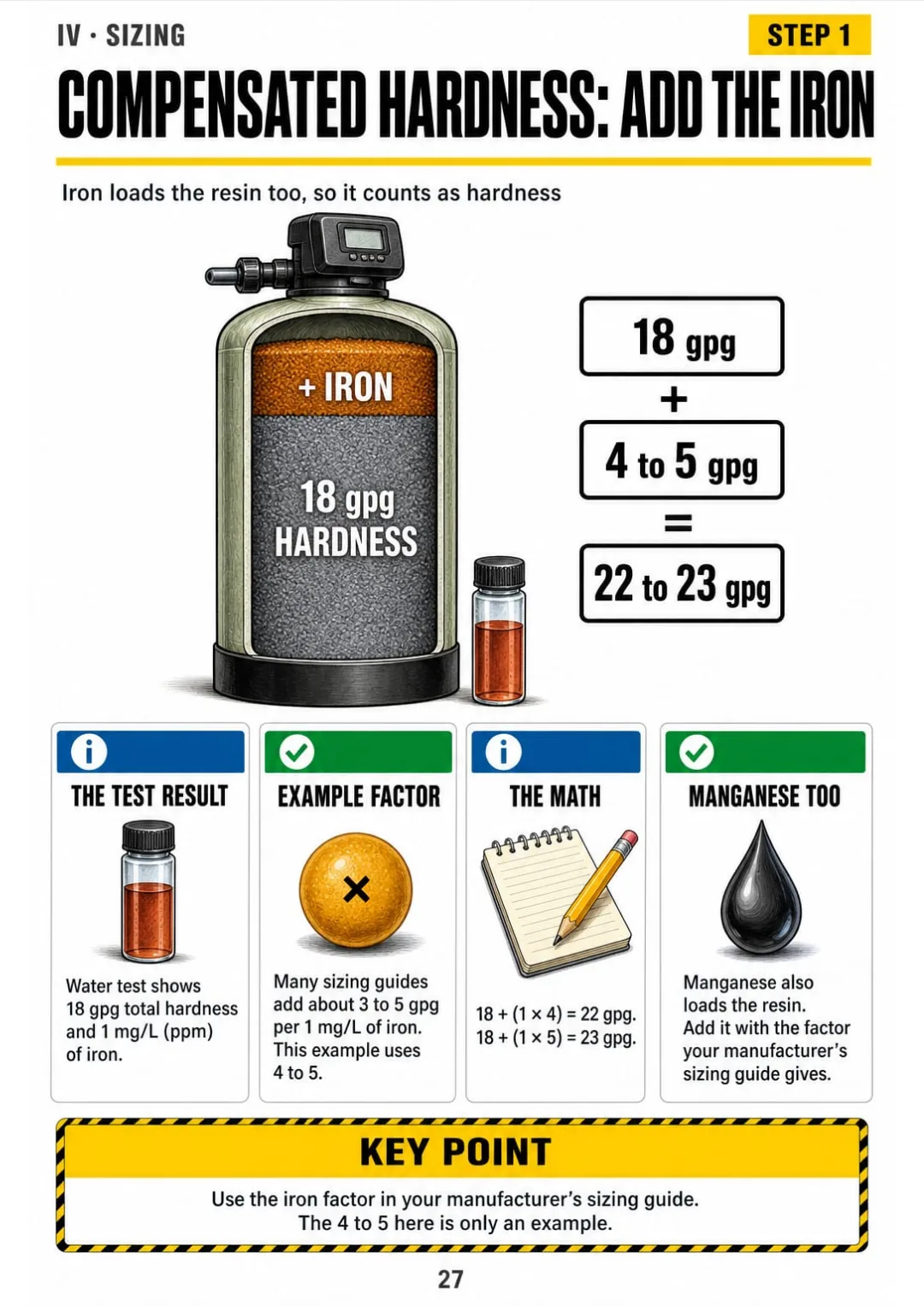
18 gpg + 1 ppm iron ≈ 22 to 23 gpg compensated hardness (example factor 4–5).
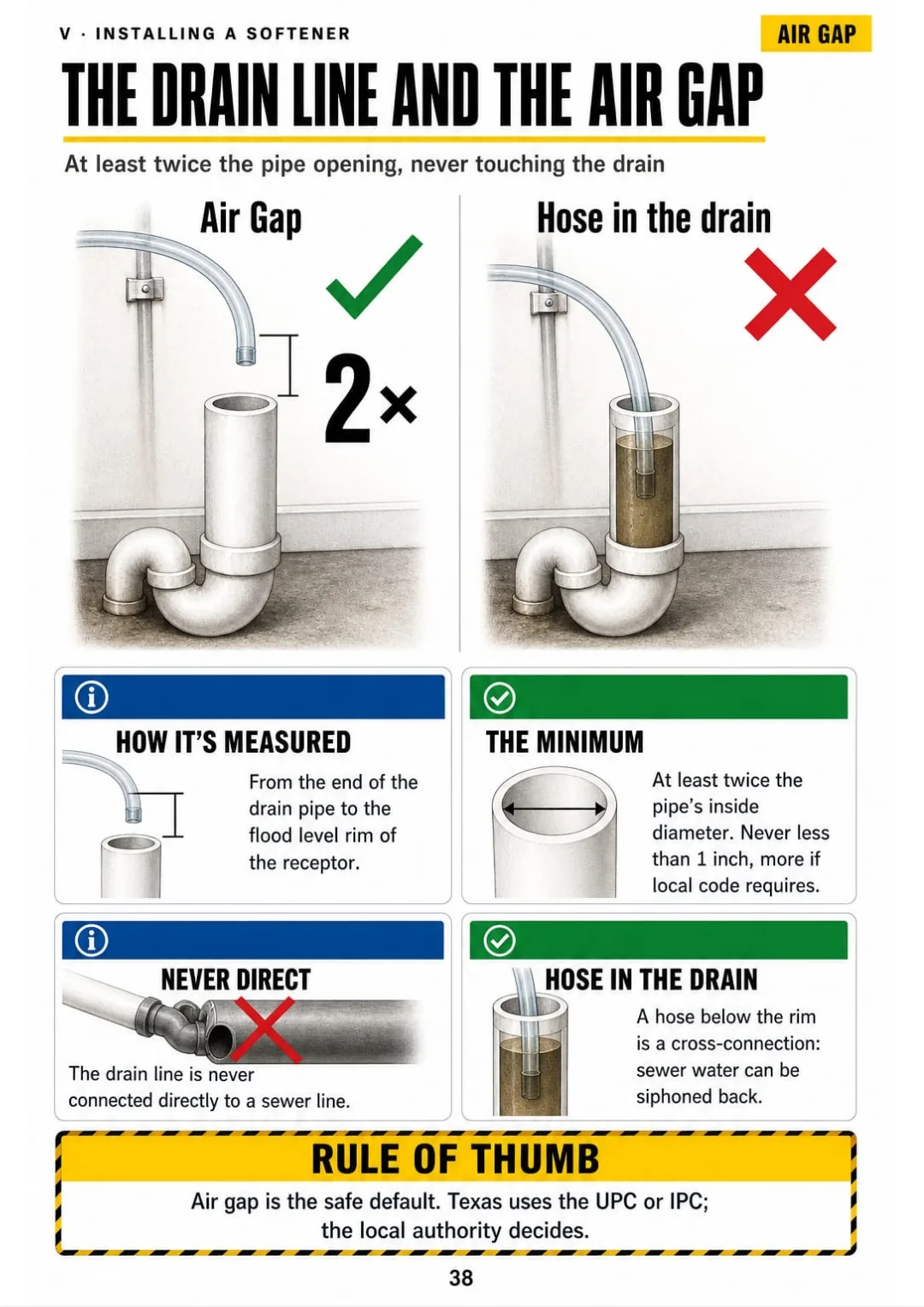
Air gap: at least 2× the pipe opening, never under 1 inch, measured to the flood level rim.
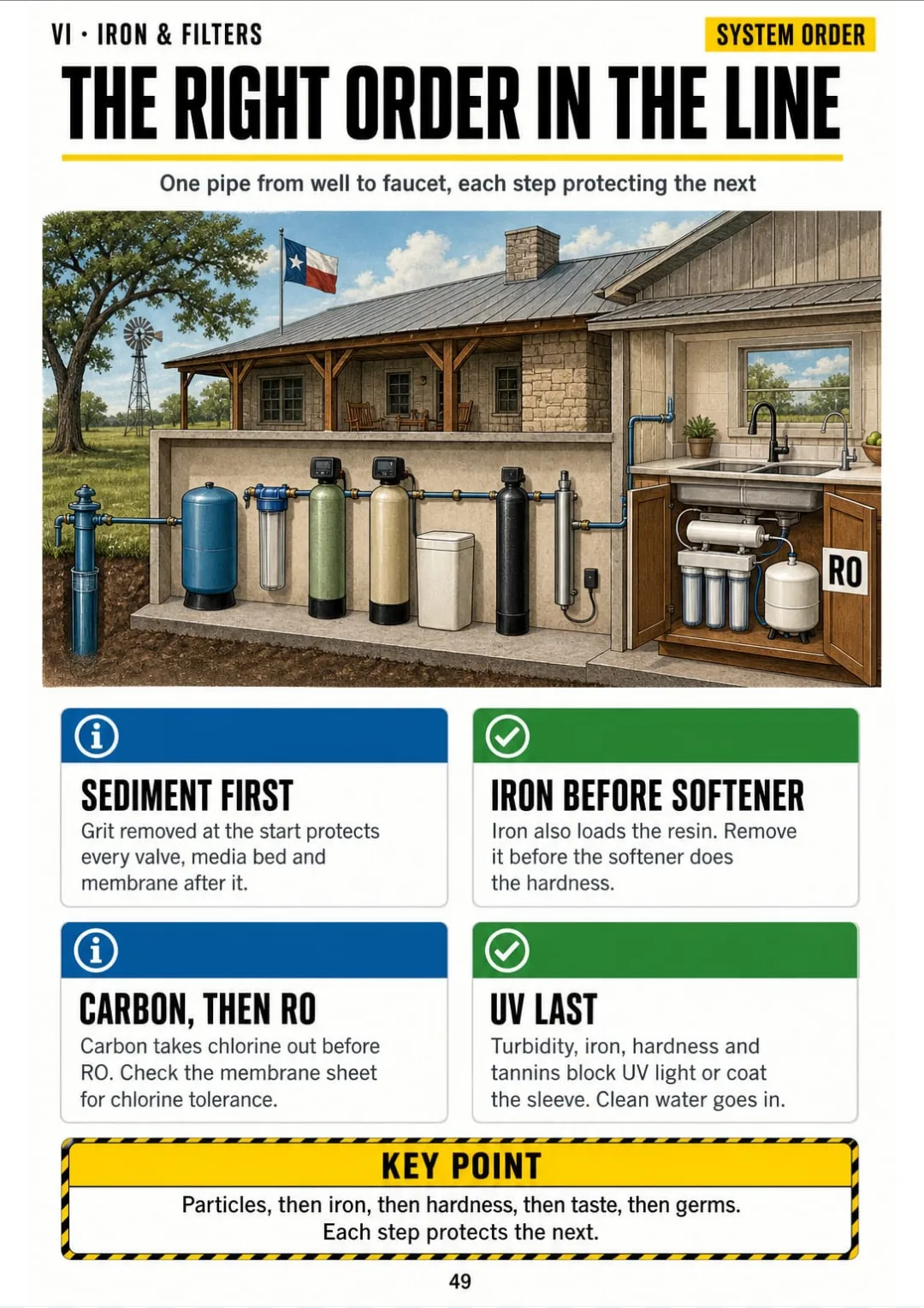
Sediment → iron → softener → carbon → UV, with RO on the kitchen branch, and why
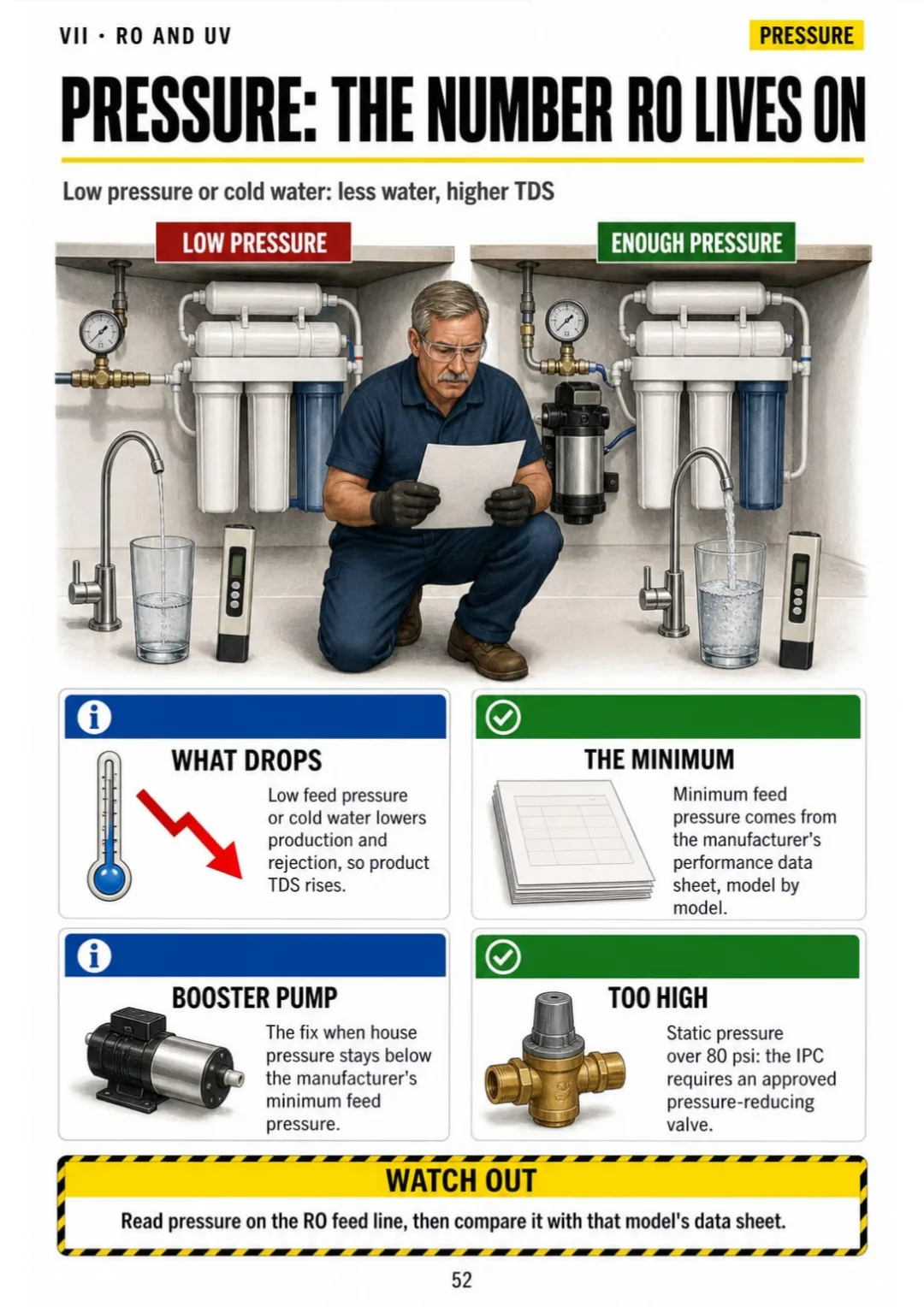
Below the manufacturer's minimum, RO production and rejection drop; over 80 psi, the IPC wants a PRV.
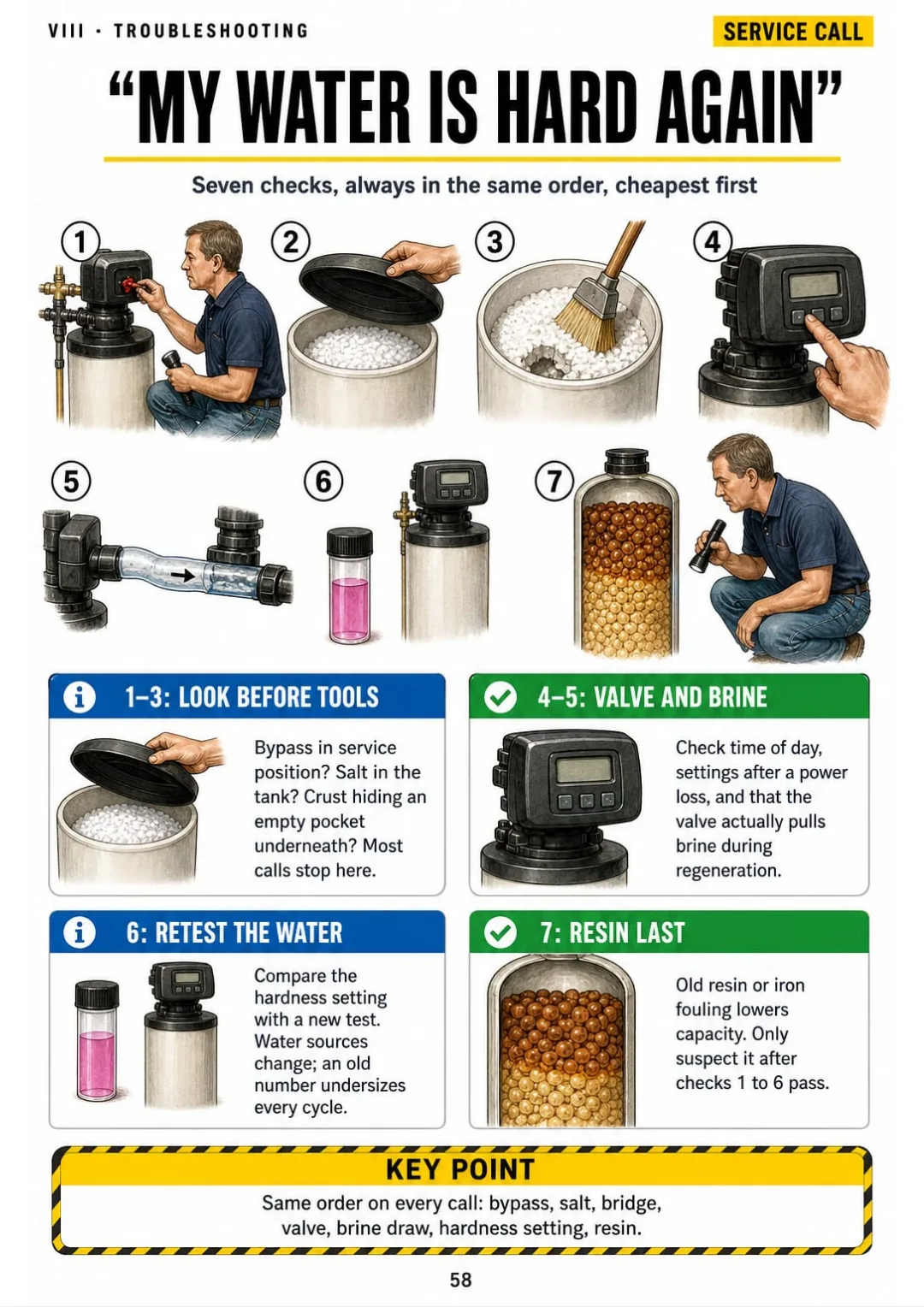
7 checks in order: bypass, salt, bridge, valve, brine draw, new test, resin
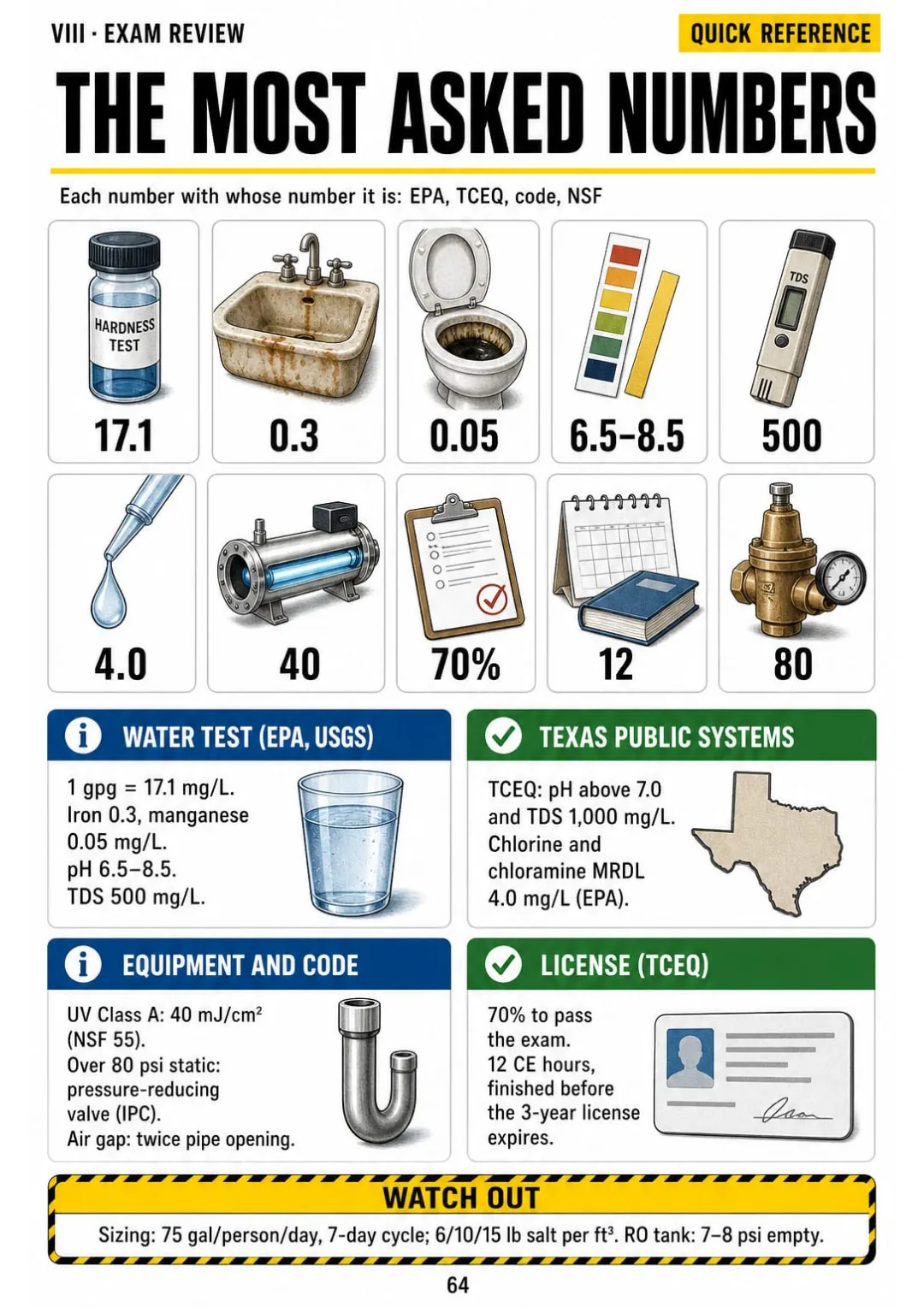
17.1 · 0.3 · 0.05 · 6.5–8.5 · 500 · 4.0 · 40 · 70% · 12 · 80
17.1 · 0.3 · 0.05 · 6.5–8.5 · 500 · 4.0 · 40 · 70% · 12 · 80

Swipe to see more →

These are real pages from the book. The table of contents is the full one: 8 parts and 61 topics.

The Problem Isn't You. It's How It Was Explained to You.

You're at a kitchen table with the water test in your hand: 18 gpg hardness and 1 ppm iron. The homeowner wants to know what size softener to buy, and you're not sure whether the iron counts.

You read about it last night. The manual spends three paragraphs on compensated hardness, ferrous iron and capacity factors, and by morning it's just words with no picture behind them.

18 gpg + 1 ppm iron ≈ 22 to 23 gpg compensated hardness (example factor 4–5).

In this book, compensated hardness is one page. The hardness and the iron are drawn side by side and added into one number: each 1 ppm of iron counts as about 4 to 5 extra grains, so 18 gpg plus 1 ppm iron comes to about 22 to 23 gpg. That's the number you size with.

Grains per gallon vs mg/L, the regeneration cycle, the drain line air gap, RO pressure and UV work the same way: each one has its own page.

So you run the number right there at the table, pick the capacity and explain it to the customer without opening the manual.

COMPARE FOR YOURSELF

The Same Topic, Two Ways to Study It

THIS
  • The manual: line after line
  • Softener parts explained only in words
  • You walk into the exam with doubts
A conventional residential cation exchange softener consists of a pressure vessel, or mineral tank, containing the ion exchange resin bed, a distributor tube extending from the control valve to the bottom of the vessel, and a lower distributor or basket that retains the resin while permitting flow. The brine system comprises a separate brine tank, a brine well housing a float-actuated safety assembly, and a brine line connected to the valve injector, while spent regenerant and rinse water are discharged through the drain connection to an approved receptor.
FOR THIS
  • The softener in one cross-section drawing
  • The eight parts labeled in a box
  • You see it and you get it
Two tanks, eight parts: control valve, resin bed, distributor tube, basket, brine well, float, brine line, drain
CONTENTS

Take a Look at the 8 Parts and 61 Topics

The job and the license, reading a water test, how a softener works, sizing and salt settings, installing a softener, iron and filters, RO and UV, and troubleshooting with exam review: 65 pages, all illustrated.

IThe Job and the License · pp. 5-11
  1. What a Water Treatment Specialist Does in Texas
  2. Class I, II and III: What Each One Lets You Do
  3. How the Exam Is Built
  4. Renewal and Continuing Education
  5. Where Your Water Comes From
  6. The Hardness Map: Why Texas Water Scales
  7. The Words the Exam Uses That the Job Doesn't
IIReading a Water Test · pp. 12-18
  1. Grains per Gallon vs mg/L
  2. Soft, Moderately Hard, Very Hard
  3. Iron and Manganese: The Stain Numbers
  4. pH: The Number That Changes Everything
  5. TDS, Chlorine and Chloramine
  6. Hydrogen Sulfide, Tannins and Bacteria
  7. From Test Result to System
IIIHow a Softener Works · pp. 19-26
  1. Ion Exchange in One Drawing
  2. The Parts in Cross-Section
  3. Tank Sizes and Resin Volume
  4. The Regeneration Cycle, Step by Step
  5. Backwash: Why It Lifts the Bed
  6. Brine Draw and the Injector
  7. Timer, Metered and Demand Control Valves
  8. Sodium vs Potassium Chloride
IVSizing and Salt Settings · pp. 27-34
  1. Compensated Hardness: Add the Iron
  2. Daily Water Use
  3. Grains per Day
  4. Picking the Capacity
  5. Salt Dose vs Capacity
  6. Setting the Salt for a Real House
  7. Service Flow Rate and Pressure Drop
  8. Reserve Capacity on Metered Valves
VInstalling a Softener · pp. 35-42
  1. Choosing the Spot
  2. The Bypass Valve
  3. Inlet and Outlet: Don't Swap Them
  4. The Drain Line and the Air Gap
  5. Drain Line Length and Height
  6. Brine Tank Overflow
  7. Bonding and Grounding
  8. Start-Up in the Right Order
VIIron, Sulfur and Filters · pp. 43-49
  1. Oxidize, Then Filter
  2. Air Injection Iron Filters
  3. Birm, Greensand and Catalytic Media
  4. Chlorine Feed and Contact Time
  5. Sediment and Carbon Filters
  6. Backwash Rates for Filters
  7. The Right Order in the Line
VIIReverse Osmosis and UV · pp. 50-57
  1. How an RO Membrane Works
  2. The RO System in Cross-Section
  3. Pressure: The Number RO Lives On
  4. The Storage Tank Precharge
  5. RO Drain Saddle and Air Gap Faucet
  6. RO Filter and Membrane Changes
  7. UV: Dose, Not Just a Lamp
  8. What UV Needs in Front of It
VIIITroubleshooting and Exam Review · pp. 58-65
  1. "My Water Is Hard Again"
  2. Salt Bridge and Salt Mushing
  3. Water Running to Drain Nonstop
  4. Brine Tank Overflowing
  5. Low RO Flow and Bad Taste
  6. Sizing Calculation Drill
  7. The Most Asked Numbers on One Page
  8. Final Install Checklist

One Page, One Topic, All Clear

Think of it this way:

A service call on a Tuesday afternoon. The softener is two years old, the customer says the water is hard again, and the brine tank is full of salt.

You open the page "My Water Is Hard Again" and the seven checks are drawn in order: bypass, salt, bridge, valve, brine draw, a new test, the resin. You start at the top and work your way down.

Sediment → iron → softener → carbon → UV, with RO on the kitchen branch, and why

Same with the drain line air gap, the regeneration cycle, the RO storage tank precharge and what UV needs in front of it: each one on its own page.

Water Softener Installer Illustrated is 65 illustrated pages in 8 parts, one topic per page, with a sizing calculation drill, the most asked numbers on one page and a final install checklist at the end.

What you see drawn, you don't have to memorize.

What's Inside Water Softener Installer Illustrated:

Ipp. 5-11

The Job and the License

What a Water Treatment Specialist does in Texas, Class I, II and III, how the exam is built, renewal, where your water comes from, the hardness map and the exam words the job doesn't use.

IIpp. 12-18

Reading a Water Test

Grains per gallon vs mg/L, the hardness ranges, iron and manganese stain numbers, pH, TDS, chlorine and chloramine, sulfur, tannins and bacteria, and how a test result points to a system.

IIIpp. 19-26

How a Softener Works

Ion exchange in one drawing, the parts in cross-section, tank and resin sizes, the regeneration cycle step by step, backwash, brine draw, control valves and sodium vs potassium.

IVpp. 27-34

Sizing and Salt Settings

You go from the water test to the right capacity in the same order every time: compensated hardness, daily water use, grains per day, picking the capacity, salt dose vs capacity, salt for a real house, flow rate, pressure drop and reserve capacity.

Vpp. 35-42

Installing a Softener

Choosing the spot, the bypass, inlet and outlet, the drain line and air gap, drain length and height, brine tank overflow, bonding and grounding, and start-up in order.

VIpp. 43-49

Iron, Sulfur and Filters

Oxidize then filter, air injection, Birm, greensand and catalytic media, chlorine feed and contact time, sediment and carbon, filter backwash rates and the right order in the line.

VIIpp. 50-57

Reverse Osmosis and UV

How an RO membrane works, the RO system in cross-section, pressure, the tank precharge, drain saddle and air gap faucet, filter and membrane changes, UV dose and what UV needs in front of it.

VIIIpp. 58-65

Troubleshooting and Exam Review

Hard water again, salt bridges, water running to drain, brine tank overflow, low RO flow and bad taste, a sizing drill, the most asked numbers and the final install checklist.

At the end of the book: A sizing calculation drill, the most asked numbers on one page and a final install checklist.
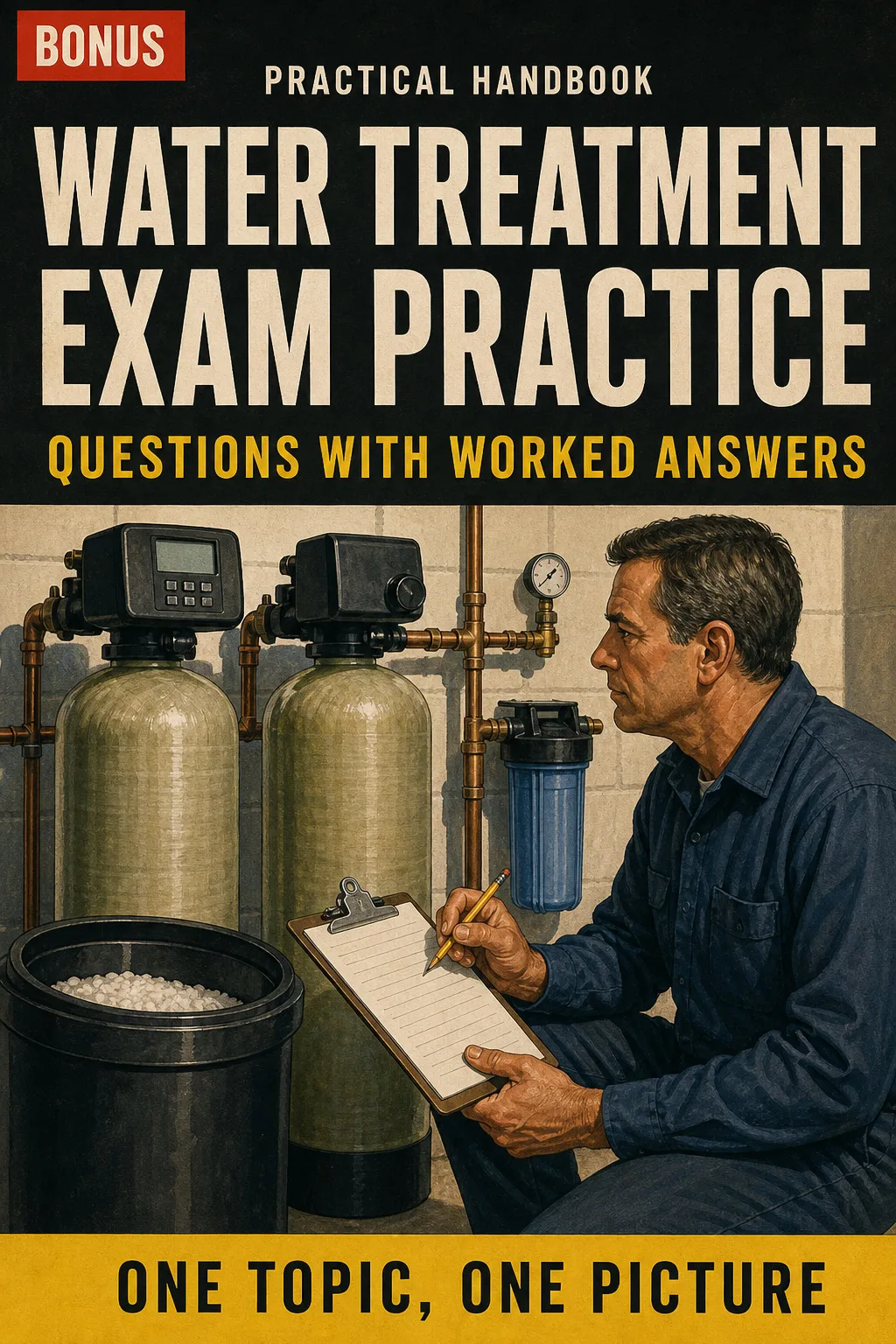
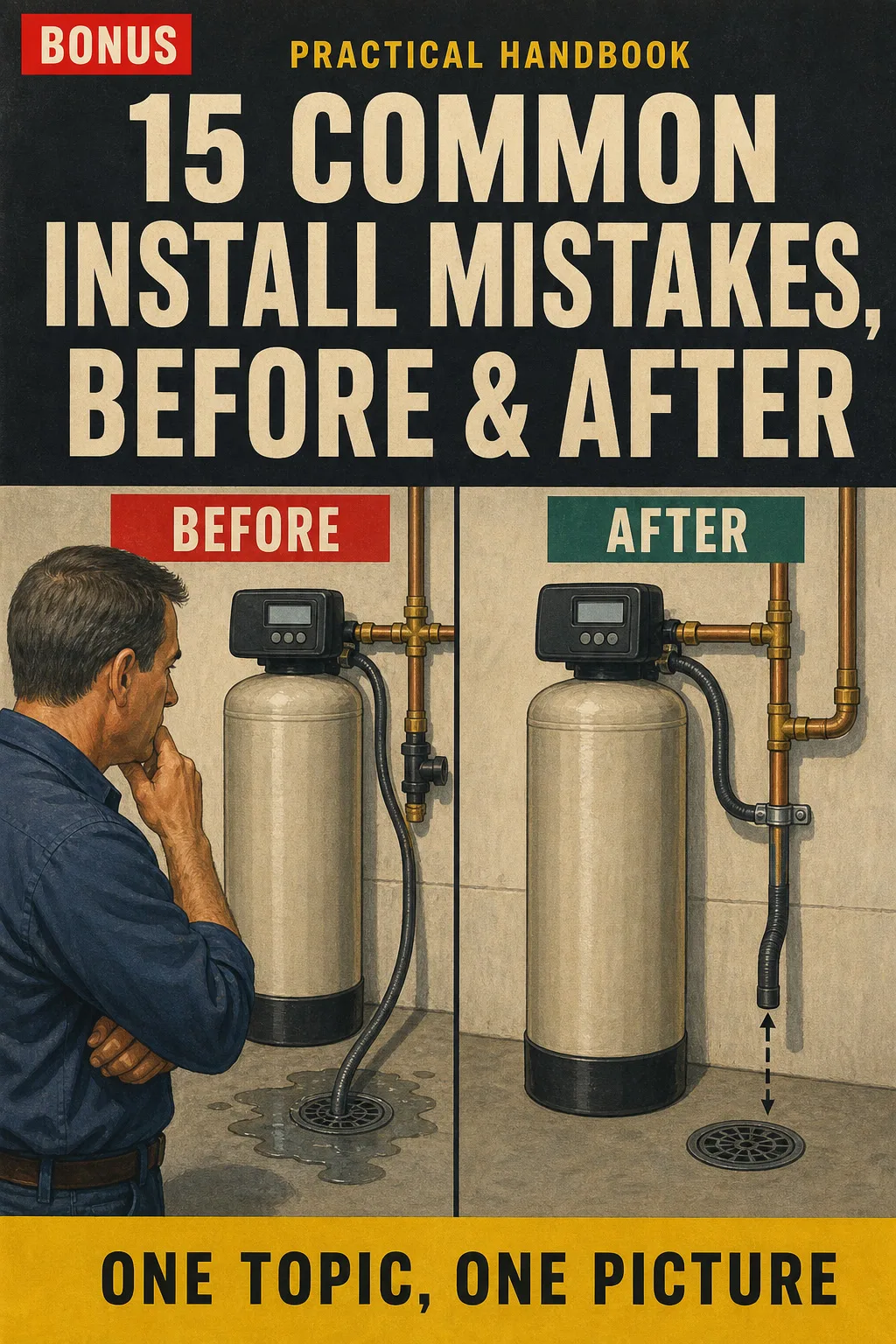
Plus: 2 Free Books

Water Treatment Exam Practice: Questions with Worked Answers

BONUS 1: «Water Treatment Exam Practice: Questions with Worked Answers»

Value on its own: US$ 17.90

Test yourself on hardness, sizing, regeneration, RO and UV with exam-style questions, and see why each answer is right.

15 Common Install Mistakes, Before & After

BONUS 2: «15 Common Install Mistakes, Before & After»

Value on its own: US$ 14.90

See the drain, bypass, brine overflow and air gap mistakes side by side with the correct setup, so you spot them before the customer does.

Water Softener Installer Illustrated with 2 Free Books

  • Water Softener Installer Illustrated: 65 illustrated pagesUS$ 63
  • BONUS 1: Water Treatment Exam Practice: Questions with Worked AnswersUS$ 17.90
  • BONUS 2: 15 Common Install Mistakes, Before & AfterUS$ 14.90
  • High-resolution PDF to printIncluded
Total value US$ 95.80
YOUR PRICE:
US$ 27
You save US$ 68.80
YES, I WANT WATER SOFTENER INSTALLER ILLUSTRATED FOR US$ 27

📄 This is a digital PDF book sent to your email: nothing is printed or shipped.

Secure purchaseEncrypted payment30-day guarantee

PDF by email: We email you Water Softener Installer Illustrated as a PDF, together with the two free books. It's a single payment: no installments, no extra charges.

Who This Book Is For

You're learning the trade

You're learning the trade

You see every system drawn in the same order: what it removes, its parts, how to size it, how to install it and what to check when it fails.

Your exam date is set

Your exam date is set

You review grains, sizing, regeneration, RO and UV one page at a time, and you test yourself with questions that explain each answer.

You already install and service

You already install and service

You keep it printed in the truck: the 7 checks for hard water again, the air gap rule and the most asked numbers, ready when the customer asks.

Everything You Get Today

US$ 95.80US$ 27
YES, I WANT WATER SOFTENER INSTALLER ILLUSTRATED FOR US$ 27

📄 This is a digital PDF book sent to your email: nothing is printed or shipped.

30DAYS
GUARANTEE

30-Day Guarantee

Try Water Softener Installer Illustrated for 30 days, bonus books included.

We refund everything if the file won't open, if the book isn't what you see here, if you were charged twice or if the email doesn't arrive. Just email us.

You pay once. No subscriptions.

Frequently Asked Questions

Is it for me if I've installed softeners for years but haven't taken an exam in a long time?

Yes. It doesn't teach you to hold a wrench. It shows the terms and numbers the exam uses, drawn, so they connect to the work you already do.

Where does the content come from?

From the TCEQ rules for Water Treatment Specialists in Texas (30 TAC Chapter 30), the EPA primary and secondary drinking water standards and the plumbing code adopted in Texas. It's written for the Texas license, not a generic national book. Rules can change, so before you register, check the current license classes and requirements on the TCEQ website.

Is it official material?

No. It's independent study material, not affiliated with or endorsed by the TCEQ or any other organization.

Does it replace the course or the training?

No. It doesn't replace the required training, hands-on experience, local code or manufacturer instructions, and it doesn't give you a certificate or training hours for the license. It helps you study and review.

Are the practice questions the ones from the exam?

No. They're written for this book to help you practice. They are not official questions from any exam.

When and how do I get it?

The book and the 2 bonus books arrive as PDFs by email, at the address you enter at checkout.

I'm not in Texas. Is it useful for me?

The water chemistry, sizing, installation and troubleshooting pages apply anywhere. The license classes, the exam structure and the rules are Texas (TCEQ). If you're licensed in another state, check its own requirements and your local plumbing code.

Can I have it on paper?

It comes as PDF by email, not as a printed book. The PDFs are ready to print at home or at a print shop, so you can keep a copy in the truck.

How does the refund work?

You have 30 days. We refund everything if the file won't open, if the book isn't what you see on this page, if you were charged twice or if the email doesn't arrive: just email us.

Before You Close This Page

No more rereading with nothing sticking.

Compensated hardness, the air gap, the RO tank: you see them drawn, and they stick.

You walk into the exam knowing where everything is.

Drawings make studying faster.

The book is right below.

One-time payment: US$ 27 · Guarantee: 30 days · PDF by email

YES, I WANT WATER SOFTENER INSTALLER ILLUSTRATED FOR US$ 27

📄 This is a digital PDF book sent to your email: nothing is printed or shipped.